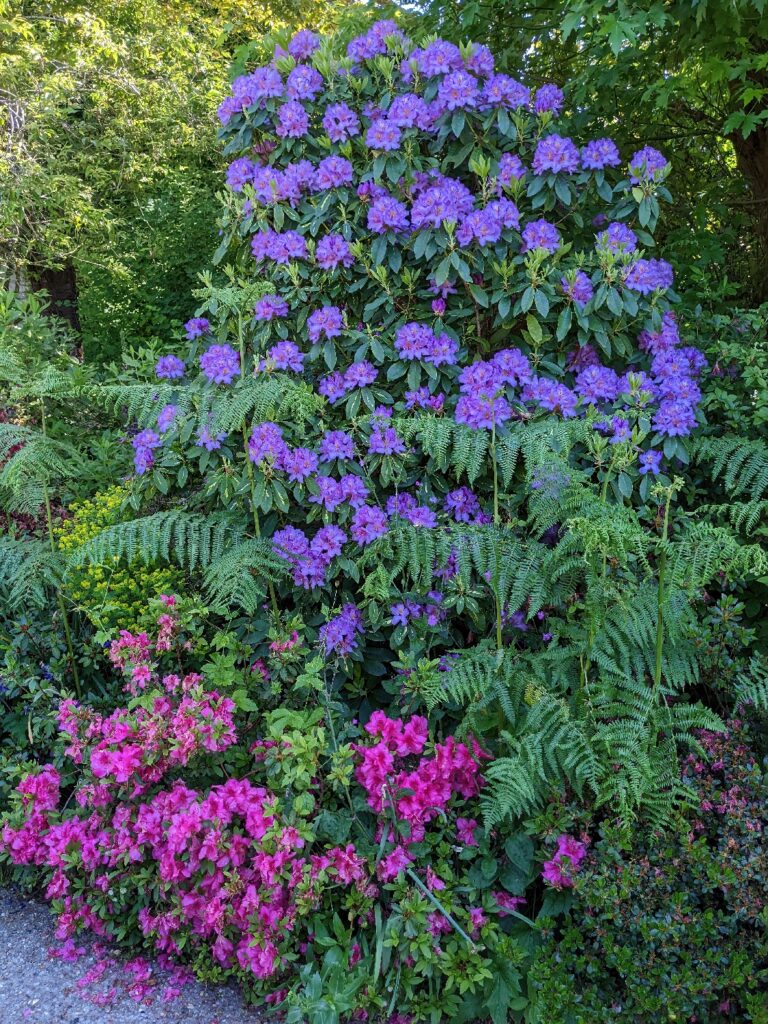
Some things are best anticipated for longer, and so our visit to Monet’s Garden in Giverny has had to wait for three years since the original booking. So it was with great excitement that we presented ourselves at the entrance gate just after the middle of May 2022. At least we did not have to wear masks, although some of the more cautious still do and I think it is only in the last week or so that masks have ceased to be required inside Monet’s house.
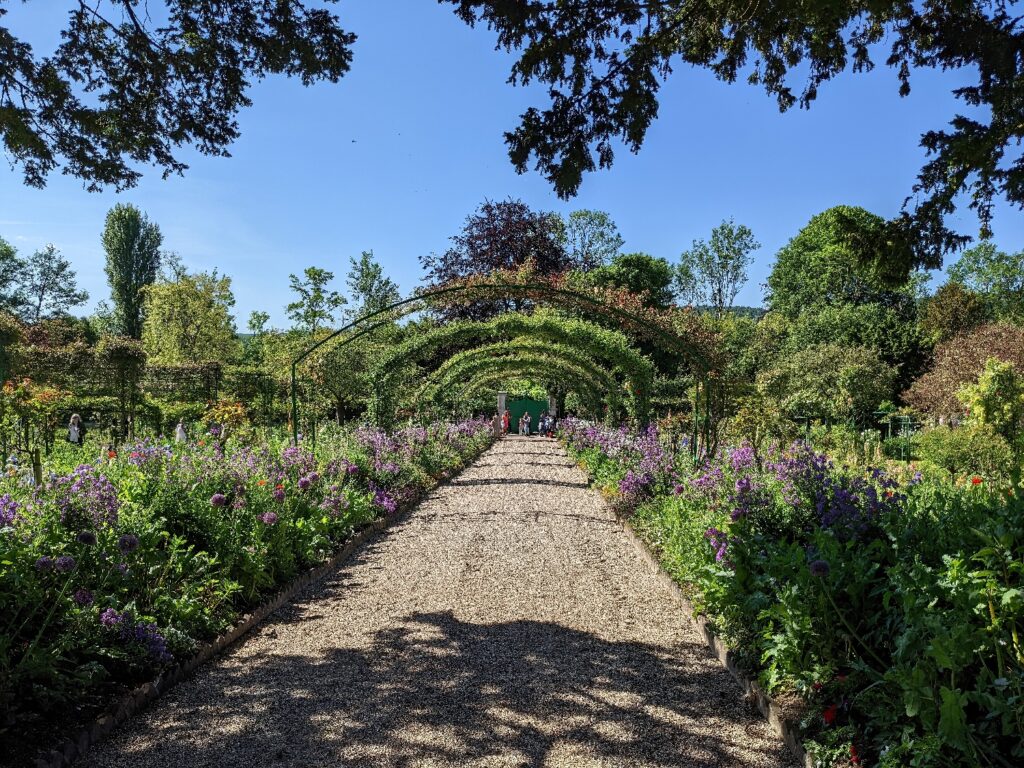
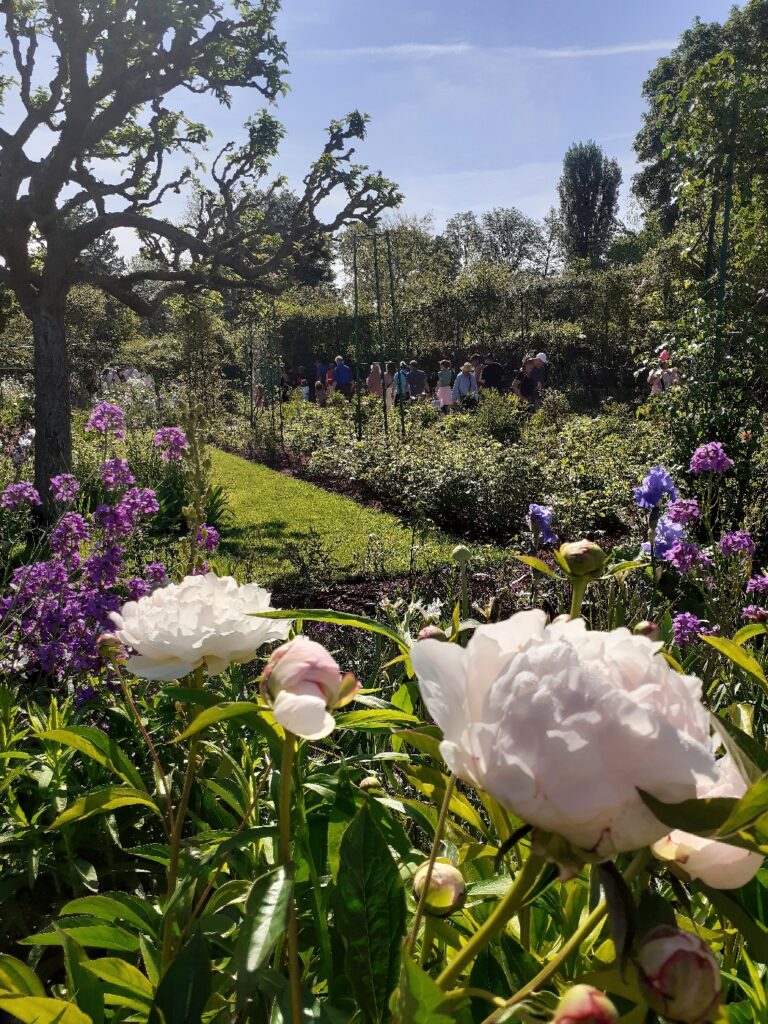
When we stepped onto the first of the many garden paths, we were greeted with a blaze of colour which literally took our breath away. Yes, the gardens are crowded, but most people understand that they will be there for some time and just have to be patient. We were told that the average daily weekday attendance can be 3,500 and perhaps as high as 7,000 on Saturdays and Sundays. As taking beautiful pictures is an essential part of the visit, you have to be careful to avoid including too many people and pay attention to the angles and backgrounds!
Our visit was on 17th May 2022. The predominant colour palette was blue, purple and white from the wonderful iris and allium blocks, but this is gradually changing as the multitude of roses and peonies begin to flower although we heard that some of the earlier tree peonies had already passed. The glorious tulips had finished for the season.
We understand from talking to the gardeners and our wonderful house hosts, Ariane and Alan Cauderlier, that the amount of plant replacement that is done each year to ensure the drama of the gardens is much greater than we would have expected. Indeed the annual 5 months of winter closure is dedicated to clearing the beds of the annuals and even many of the perennials. This is a vast task, involving triple digging to ensure that even the tiny amount of bare soil is completely weed-free.
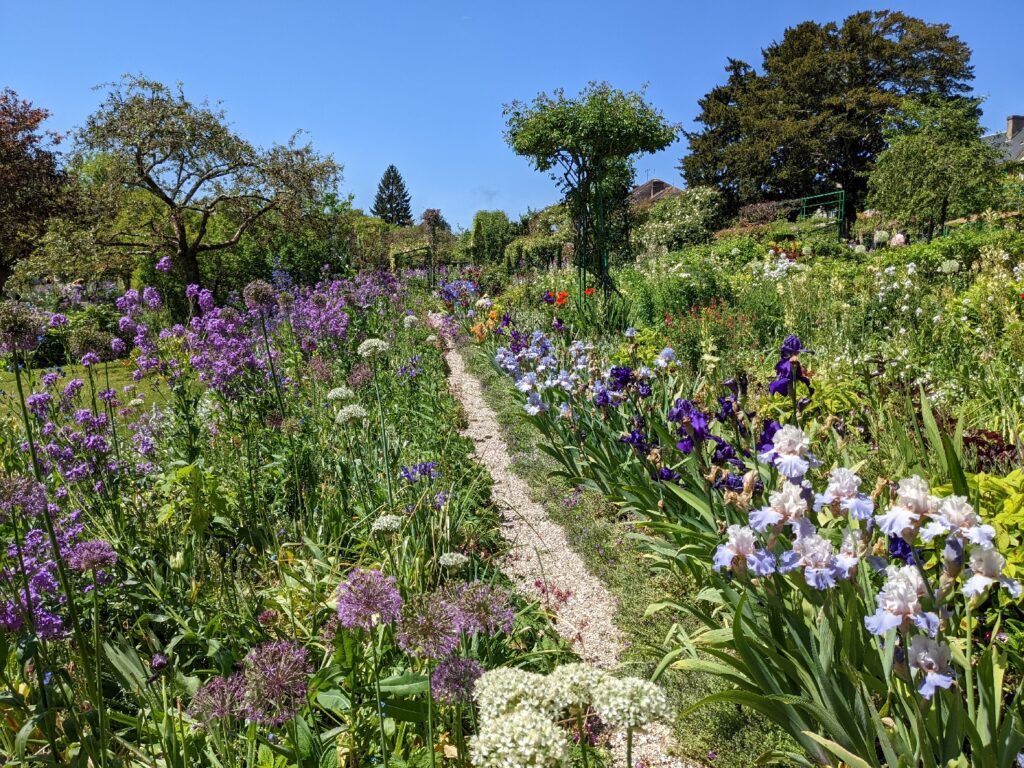
Monet’s garden masterpiece is an industry and the legacy of the great impressionist painter is run by the Monet Foundation, so no effort or expense is spared to ensure a changing vista across the whole garden area, which is surprisingly compact.
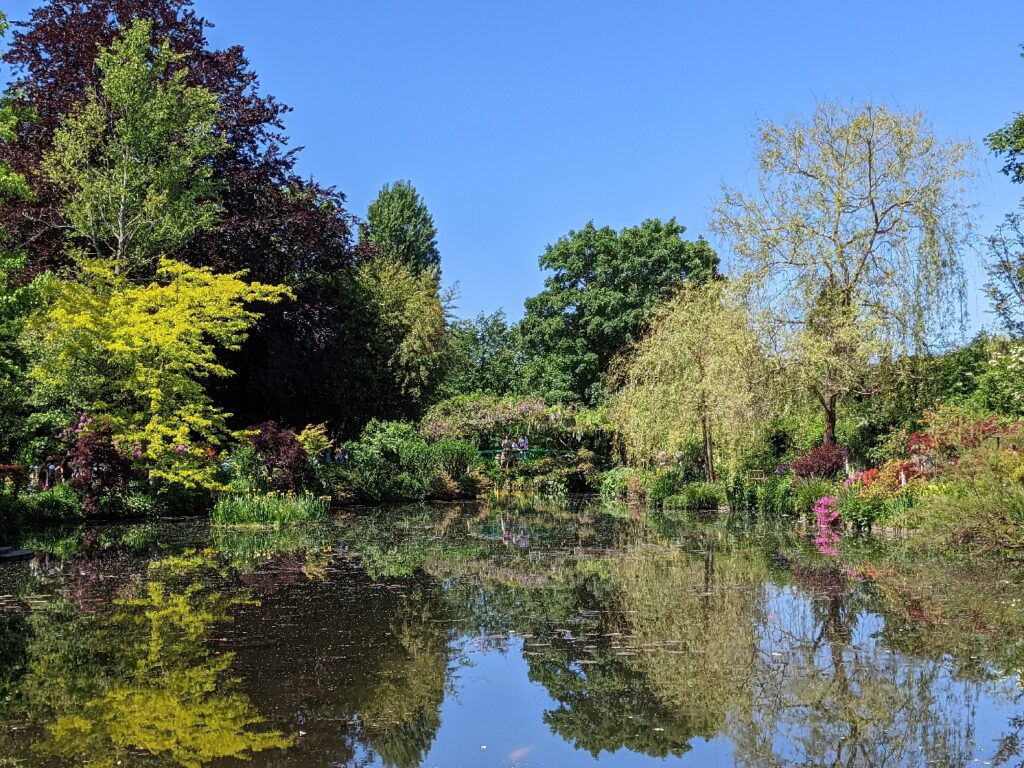
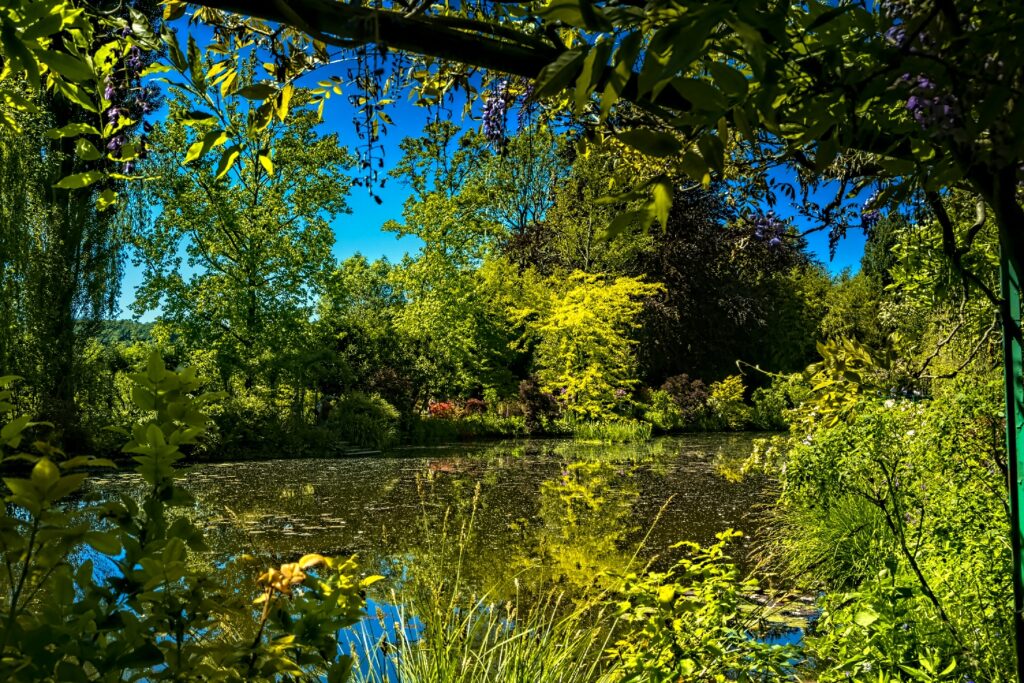
Perhaps the best known feature of Monet’s Garden is the pond and the water lilies. Late frosts this year have resulted in a slowed appearance for these iconic and much photographed and painted pads and blooms. In another week the lily pads, which are just visible below the surface will make their appearance. Sometimes the middle of May will see the first of the water lily flowers open to the sunshine. If we are to see this famous feature of Monet’s Garden, then we will have to return in another year.
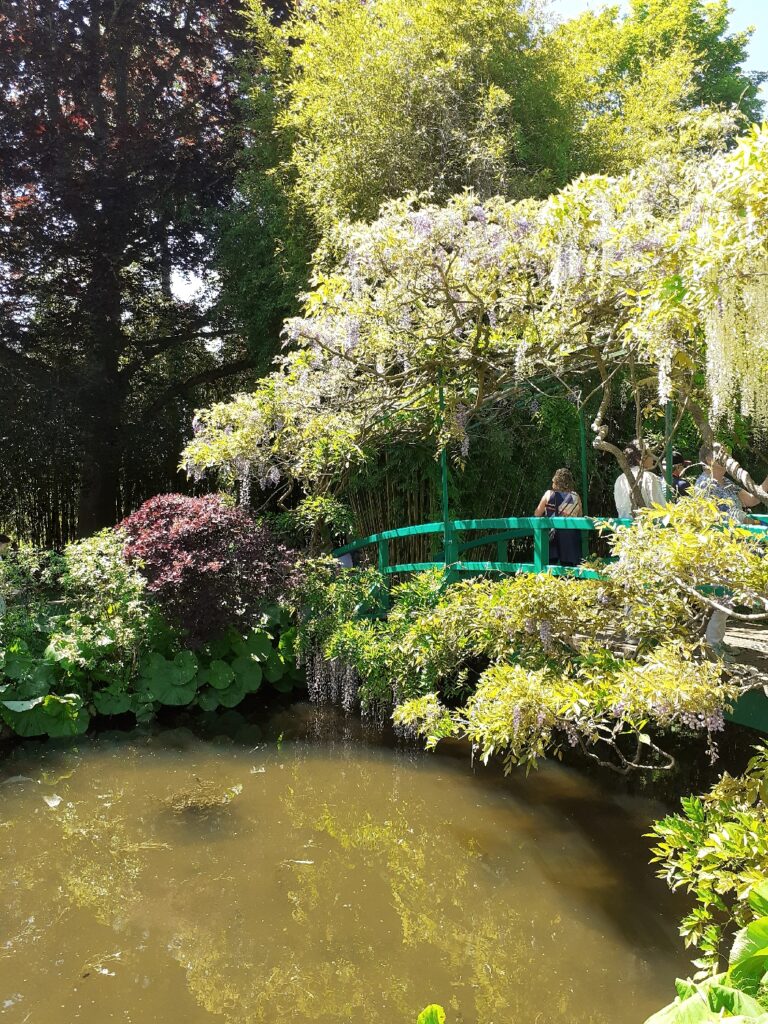
At each end of the pond are two green painted bridges, which seem to echo each other. They offer a great place to stand and just admire the pond and the surrounding trees and shrubs. In April and May the famous curved bridge is famed for its curtain of fragrant wisteria, although this year the purple blooms were past their best and had already faded to a pale bluely-white.


Of course, a visit to Giverny and Monet’s garden would not be complete without a tour through the painter’s house. Again, patience is required as everyone wants to look at and study the reproductions of Monet’s and other artists’ work. The visitor has the opportunity to view all of the rooms and, not least, Claude Monet’s studio. These rooms give an intimate and revealing glimpse of the life of a successful French artist and his family. Monet had acquired the house in November 1883, renting it initially and then buying it in 1890. He was to live here in Giverny for forty-three years. He immediately began laying out the garden, gardening being his other great love.


During our visit the temperature was approaching 30 degrees centigrade, so once through the inevitable end of the tour shop, a long late French-style lunch was much needed after the 4 hours of garden pleasure. Giverny, the village, is dominated by everything Monet, including studios and shops and floral sights everywhere you look. A visit to the church is essential for all those who want to see the last resting place of the Monet family. The cemetery also contains two, immaculately maintained British airman’s war graves.
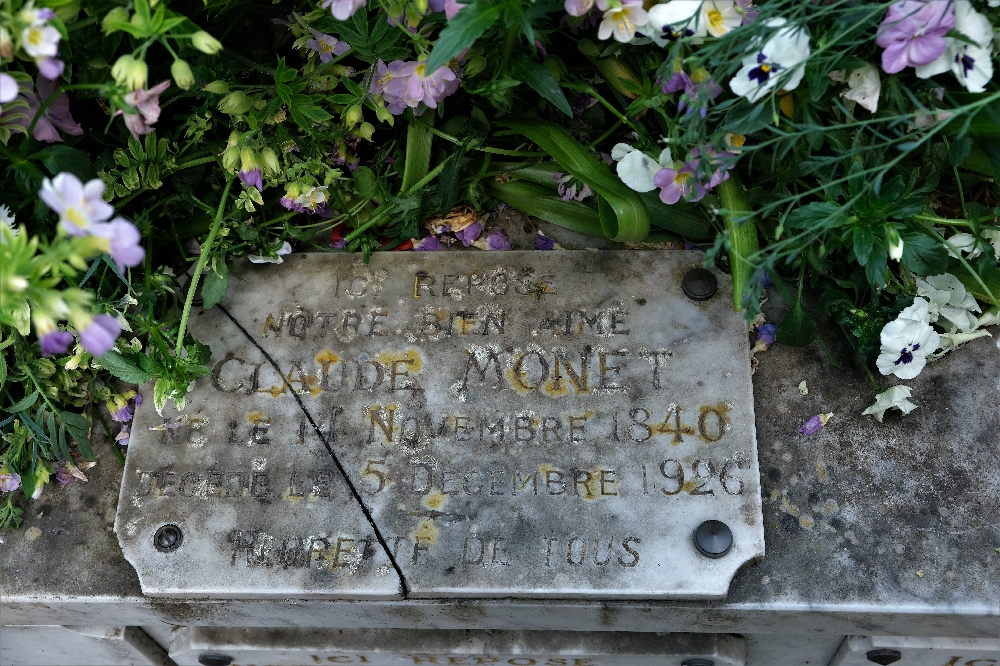
Even after a whole day spent in Giverny you are left with the impression that ‘once is not enough’. We were lucky enough to be staying at the home of one of the leading Monet photographers and writers who, as a multi-lingual guide in the gardens, has the privilege of being able to visit the gardens almost every day. Ariane and Alan Cauderlier own the delightful Hermitage and garden, which is the first house in Vernon, a village which spans the river Seine. Here we were welcomed, in the French way, with a seat in the garden, a bottle of wine and the company of Alan who told us much about the area, as well as about some of its more exotic and surprising wildlife.
On our second evening, we could return the compliment and we were delighted to be joined by Ariane, who signed a copy of her book, The Magic of Giverny, A Year in Claud Monet’s Garden.
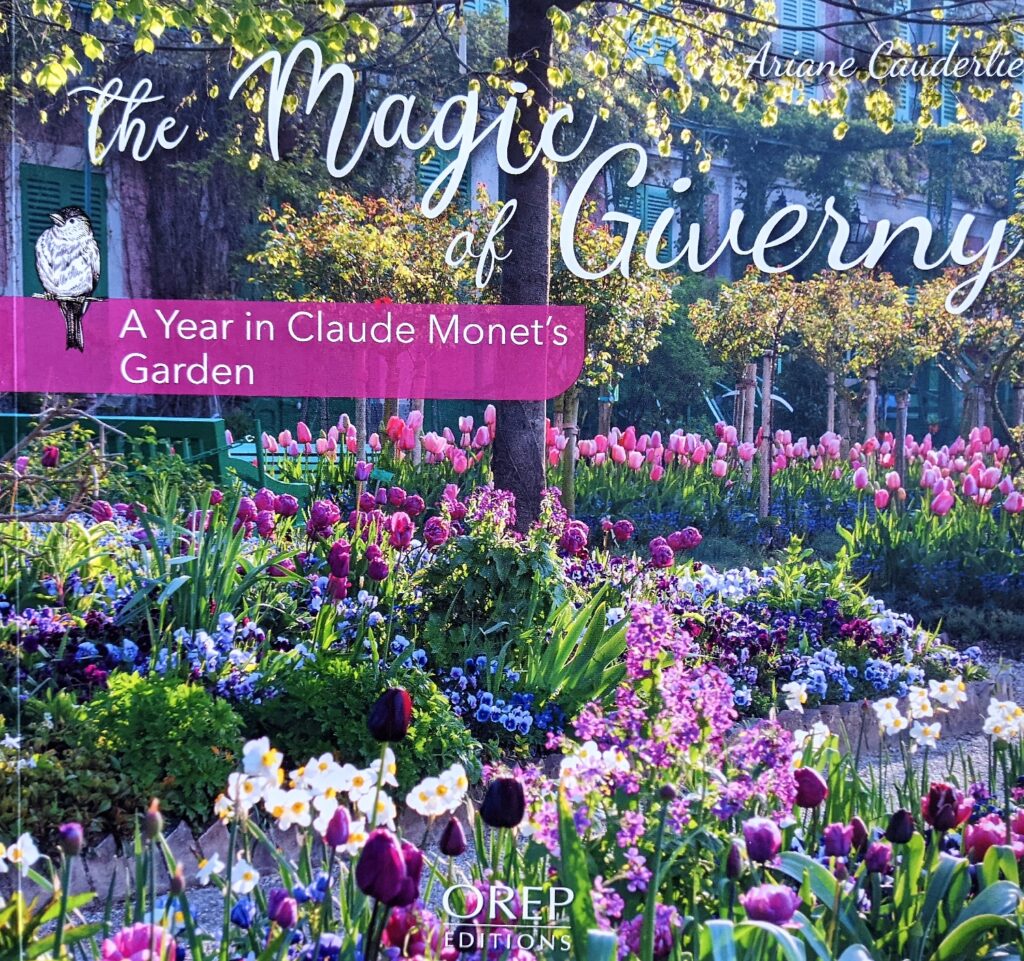

Ariane writes a regular blog on her website covering ‘everything Giverny’ and the gardens in particular. The website can be found by clicking here. It is a great resource for anyone who might have visited the gardens and would like to keep track of developments.
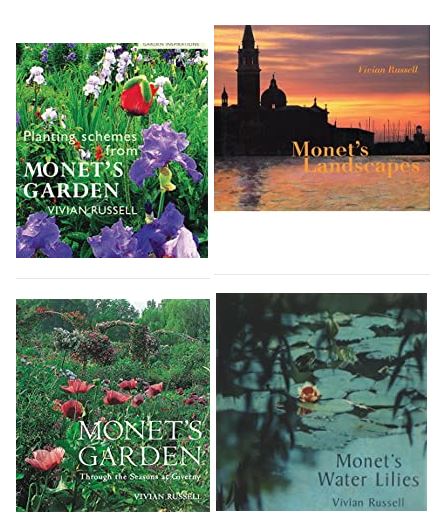
Other books which should be on your reading list about Monet’s Garden as those by Cumbrian writer/photographer Vivian Russell, available from good bookshops and Amazon.
Ronnie Auld – Cumbria in Bloom